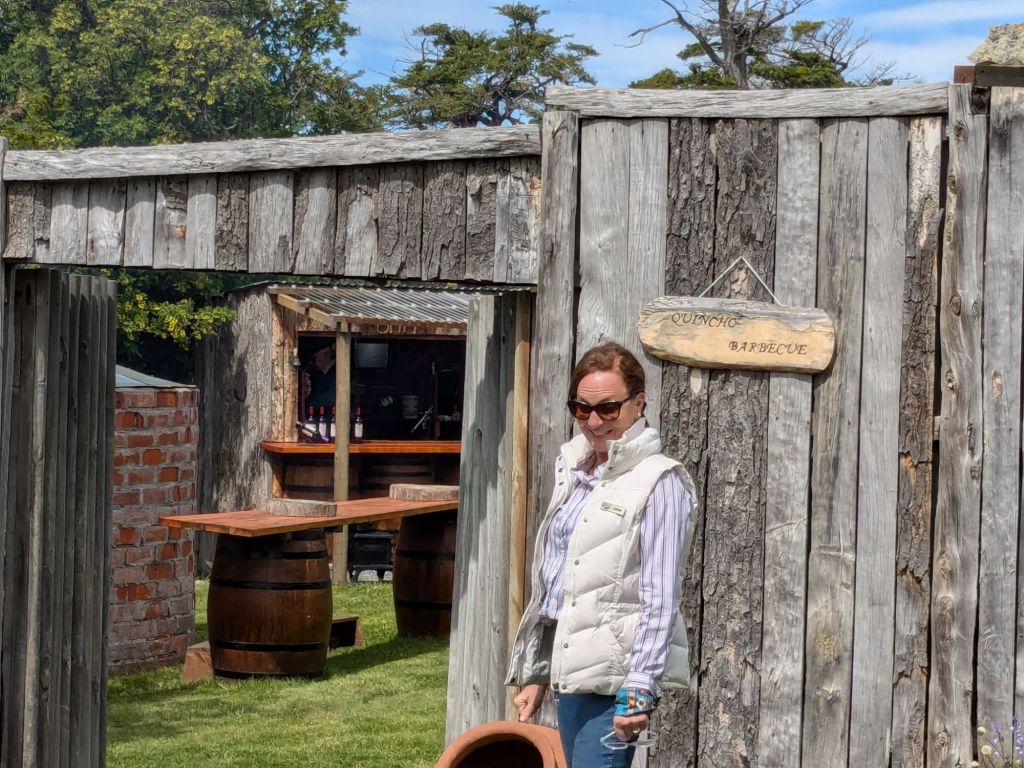
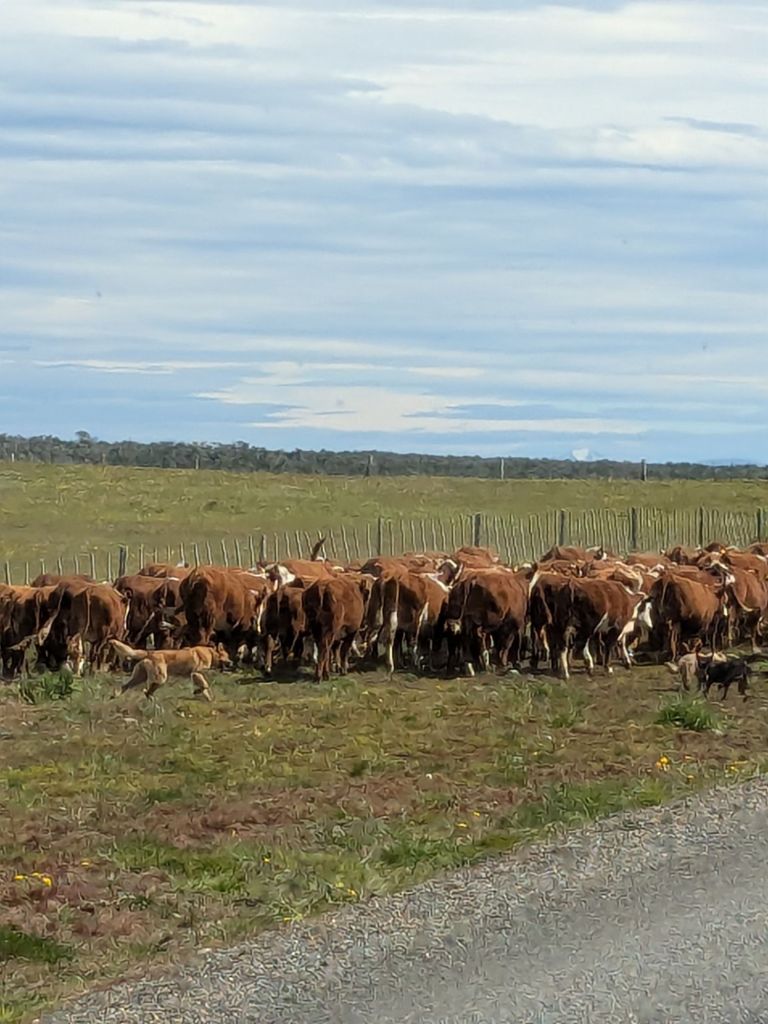
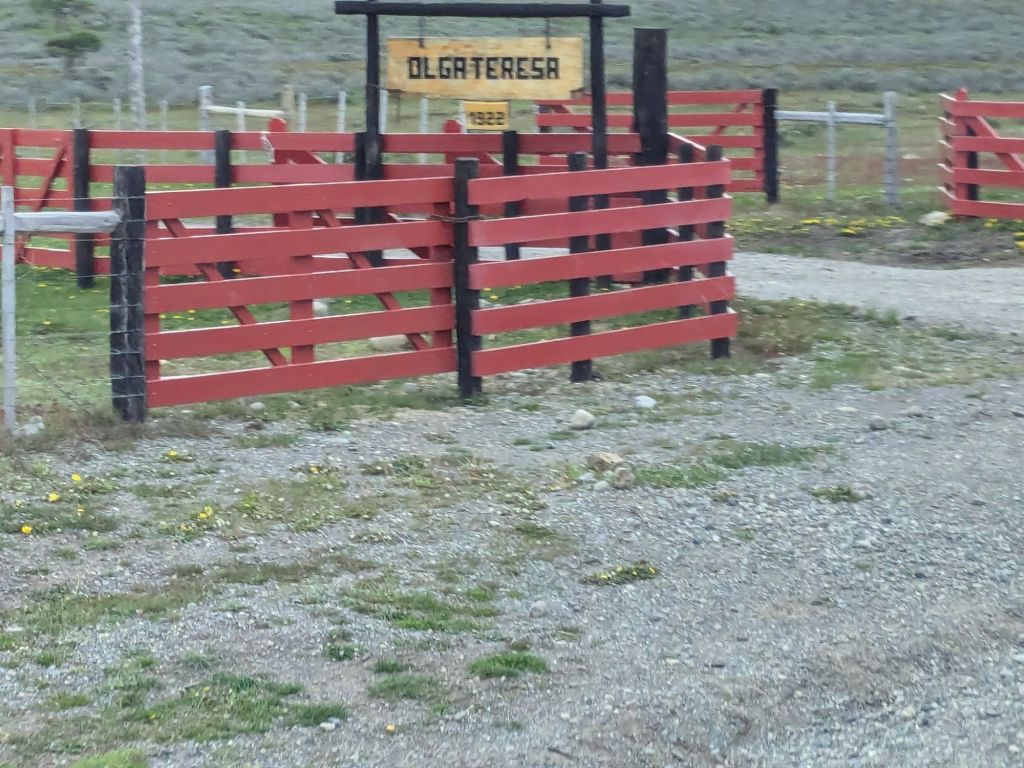
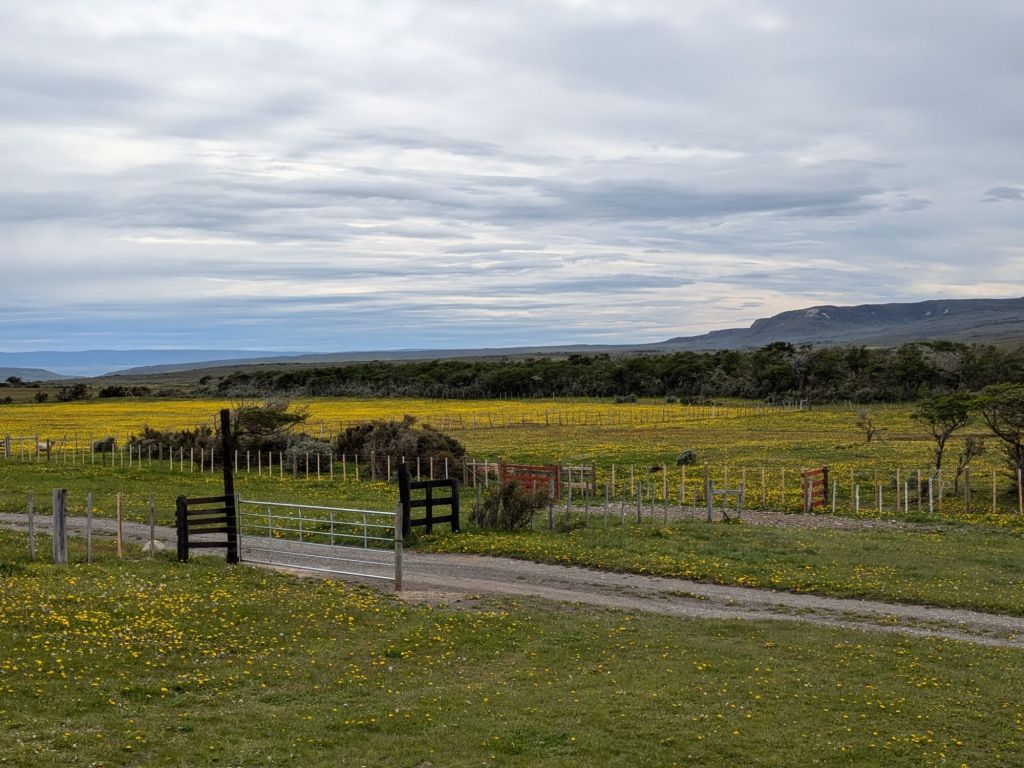
A hundred and two years ago a couple came over from France and began what today is a 6000 hectare ranch (almost 15,000 acres or 23 sections). The ranch is still in the same family and raises sheep, which at this time is not a lucrative commodity. To diversify their ranch they flew in Hereford cattle from Texas. They now have around 400 head. They also have created a niche business for tourists.


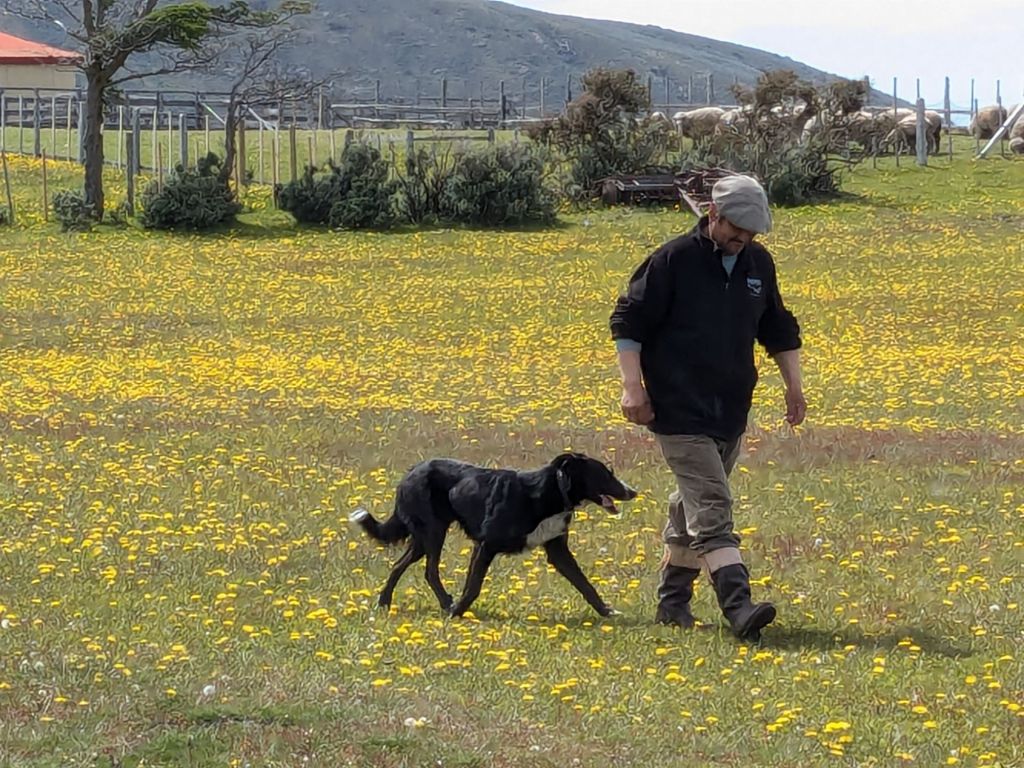
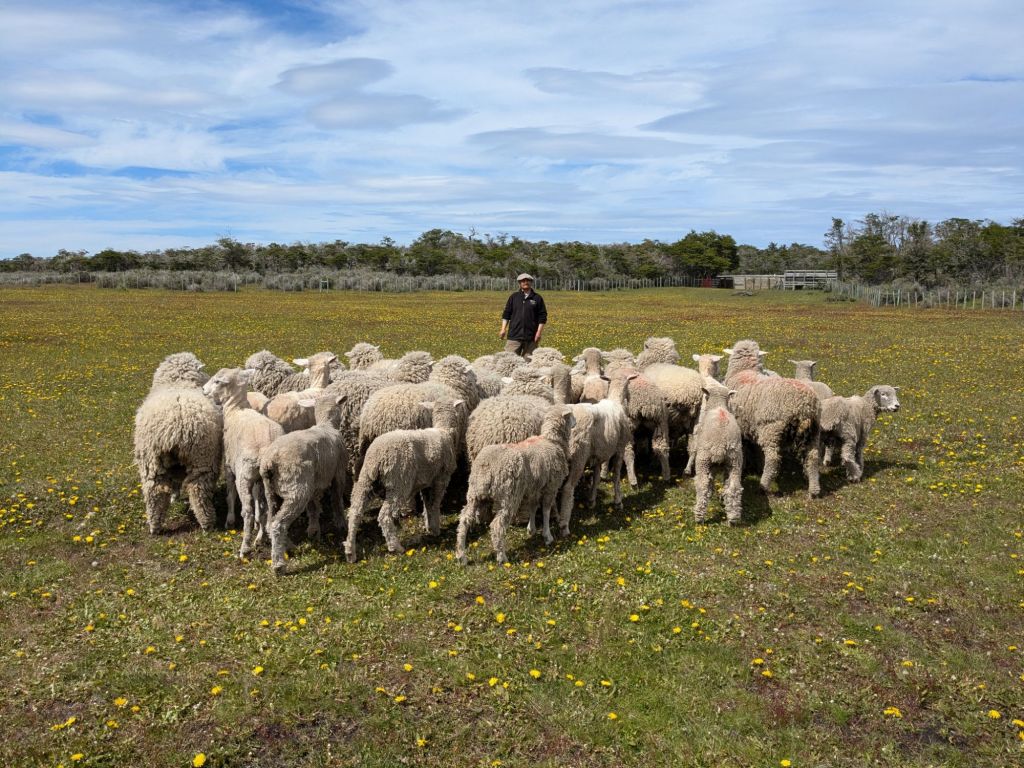
They have dogs that work both the cattle and the sheep. Three sheep dogs can handle up to 200 sheep at a time. I saw three dogs working cattle, they kept them off the road and away from the bus.

Shearing the sheep is done once a year. This is from November to January. It takes a lot of labor to shear the sheep, they have 6 shearers and each one can shear approximately 120 sheep a day.
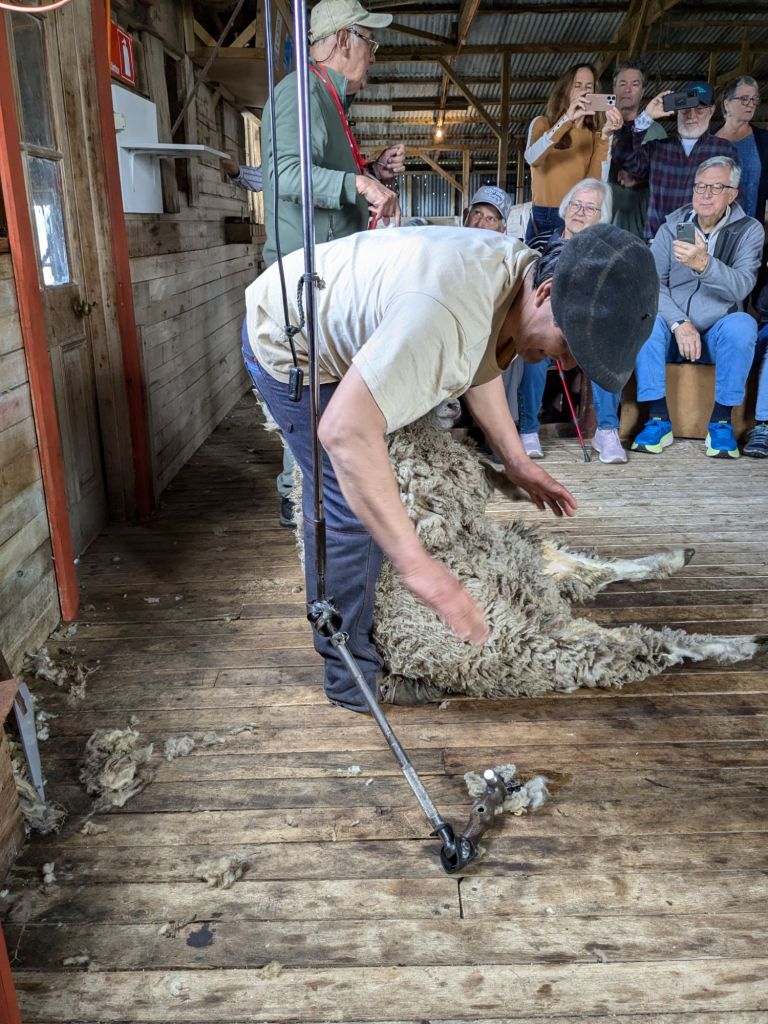


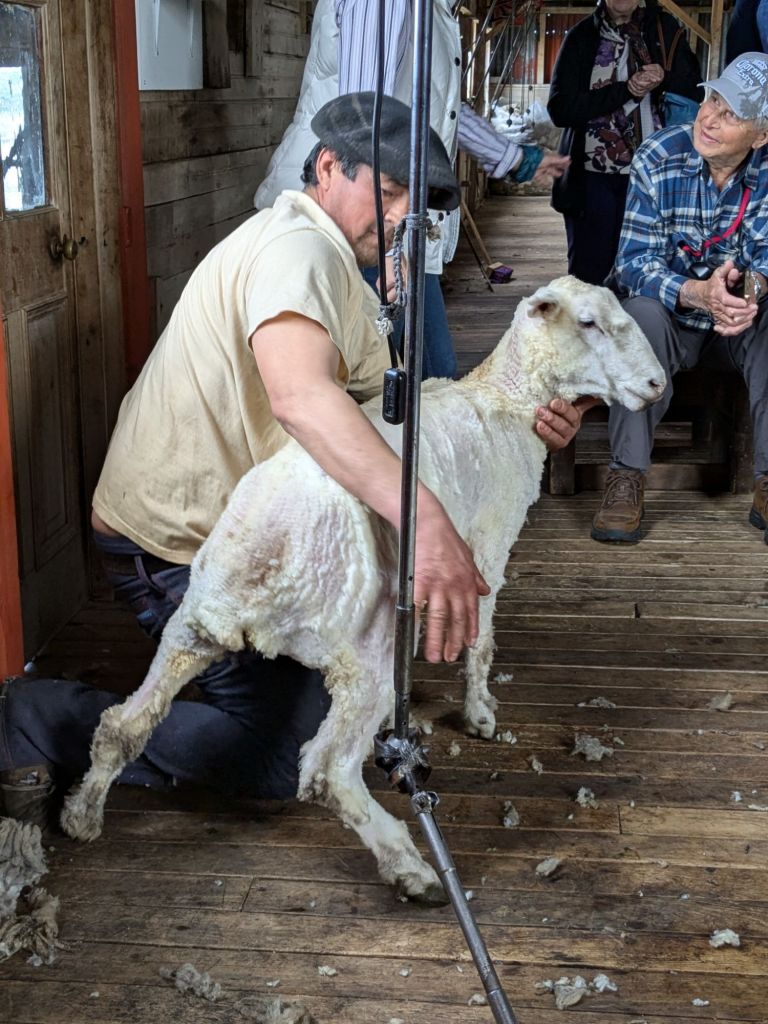


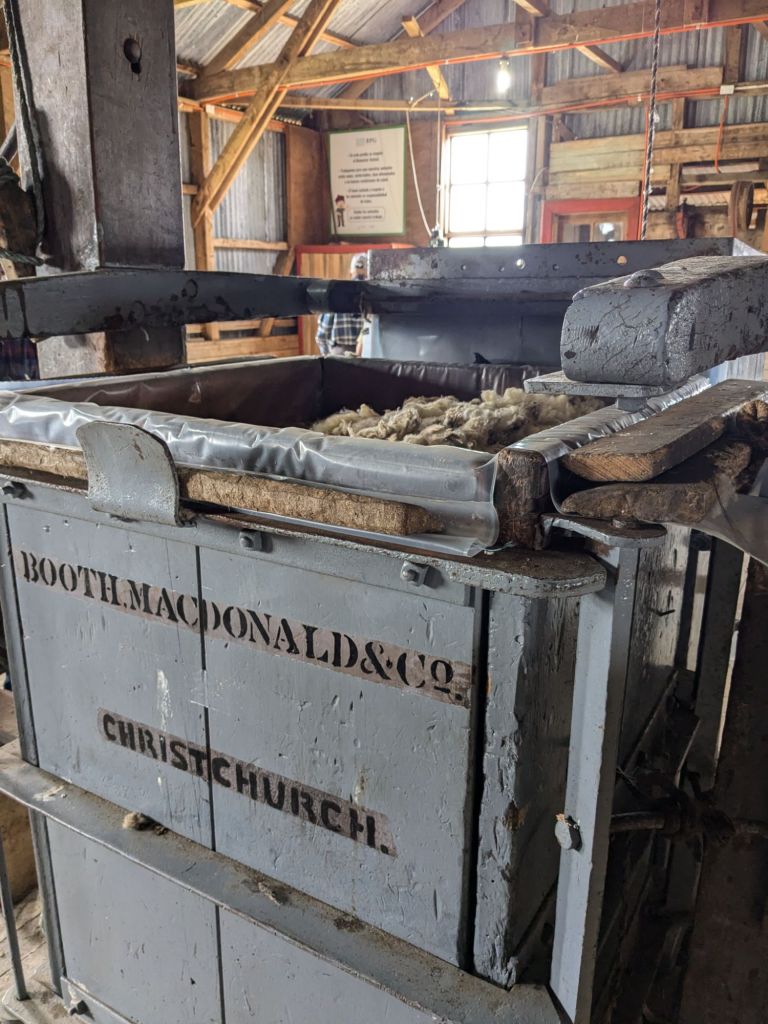
After shearing the wool they pick out the twigs and other things that are stuck in the wool. Then the wool is bailed and eventually washed.




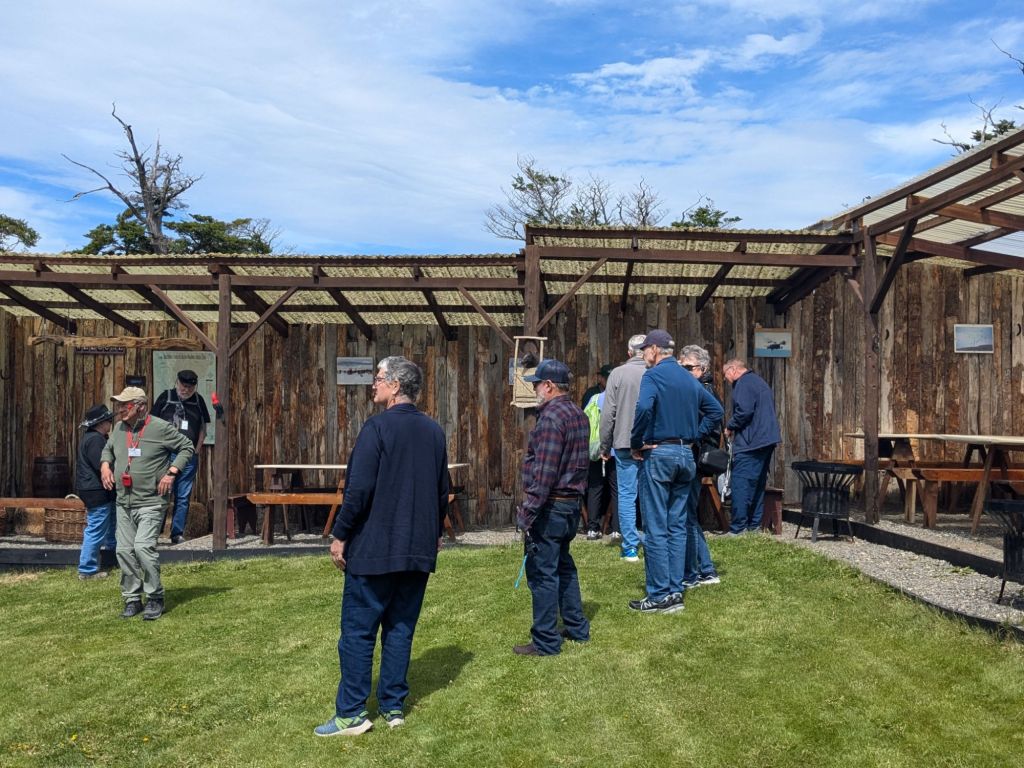
The family were great hosts. When I arrived I had coffee and cookies. For lunch I had an empanada, roasted lamb, potatoes, salad and Ice Cream.

While I was at the ranch, Bryan took a walking tour of the city. Punta Arenas was originally established in 1848 as a Chilean penal colony, though there were towns in the area off and on from 1584. With the location at the Pacific mouth of the Strait of Magellan, and with an abundance of low grade coal, it provided much needed supplies to ships traveling between the oceans. Once the Panama Canal was built, more ships traversed there and Punta Arenas lost much if its power and prestige.

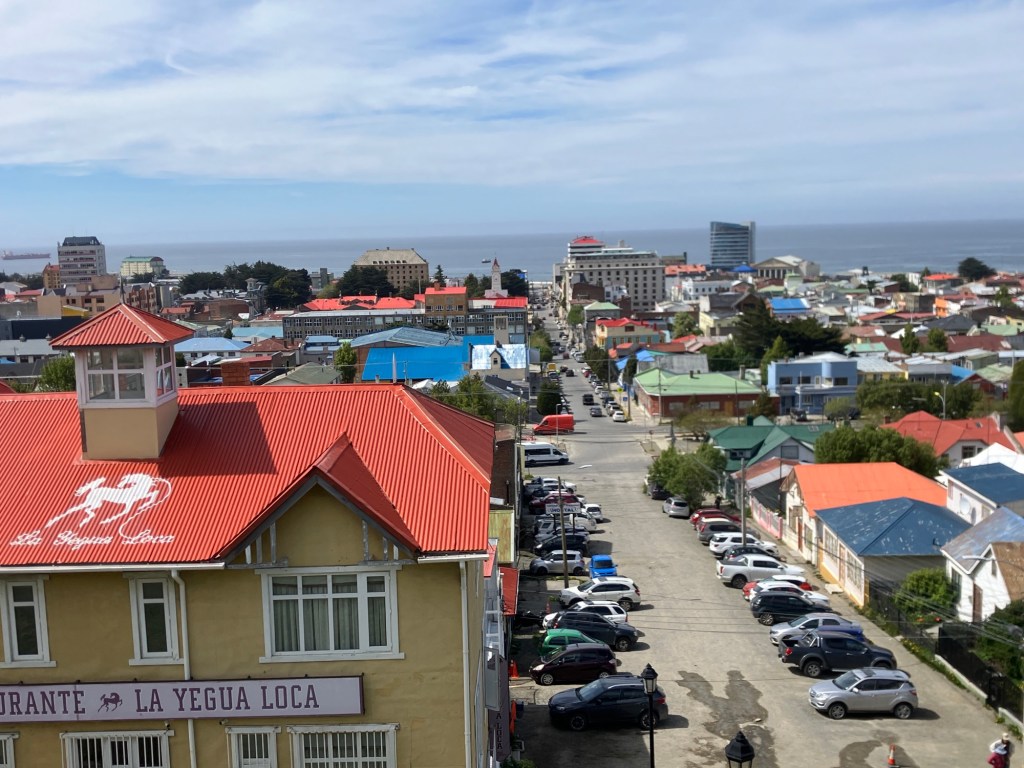
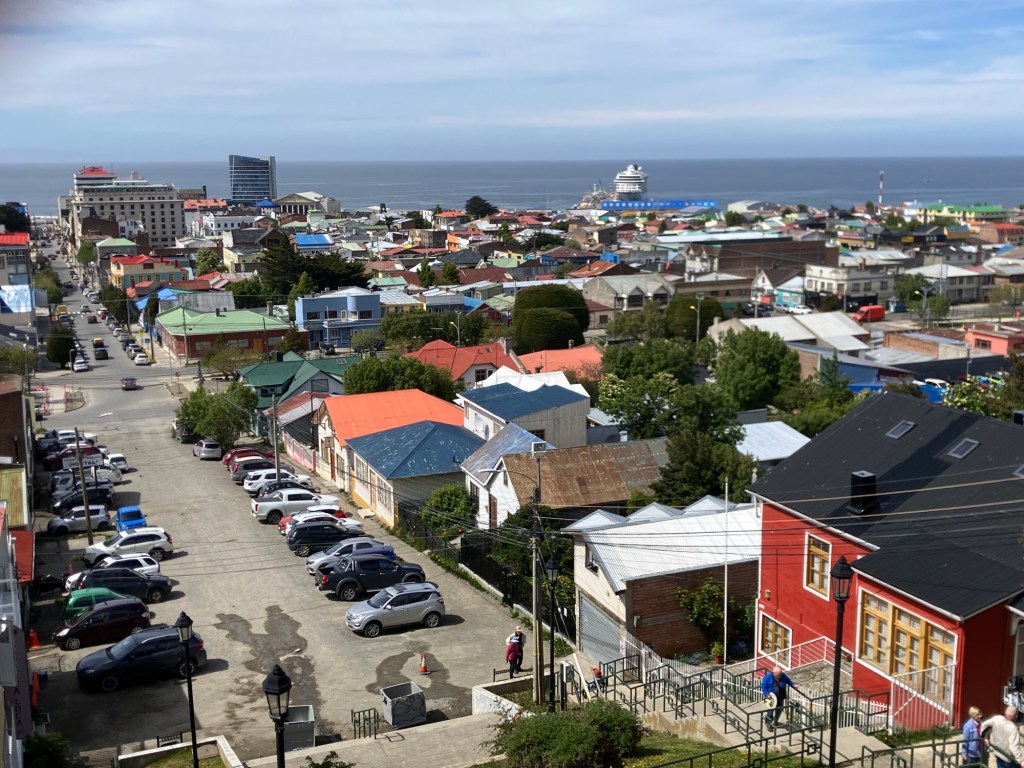
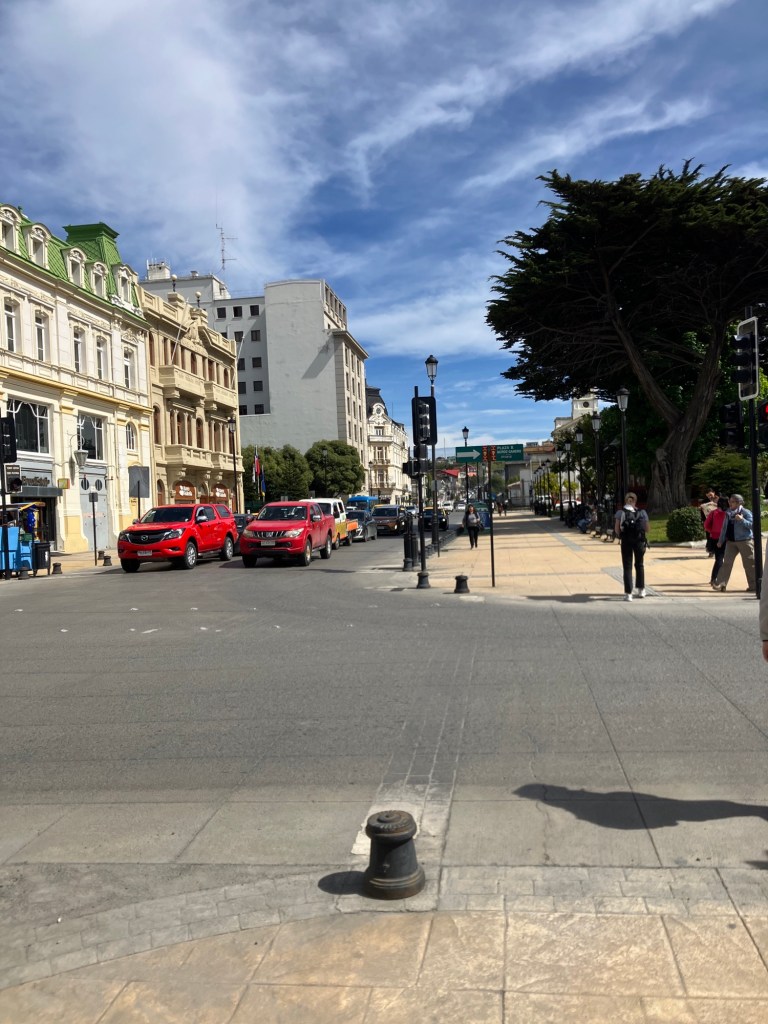

In its heyday between 1890 and 1940, this area became an important sheep-raising area and experienced a small gold rush. This brought a lot of immigration from Europe, especially Croatia. It is said to have the largest percentage of Croatians outside the home land and the former Yugoslavia.
It used to have 4 papers, printed in English, German, Spanish and Croatian and claims to be one of the first cities in South America with electricity.
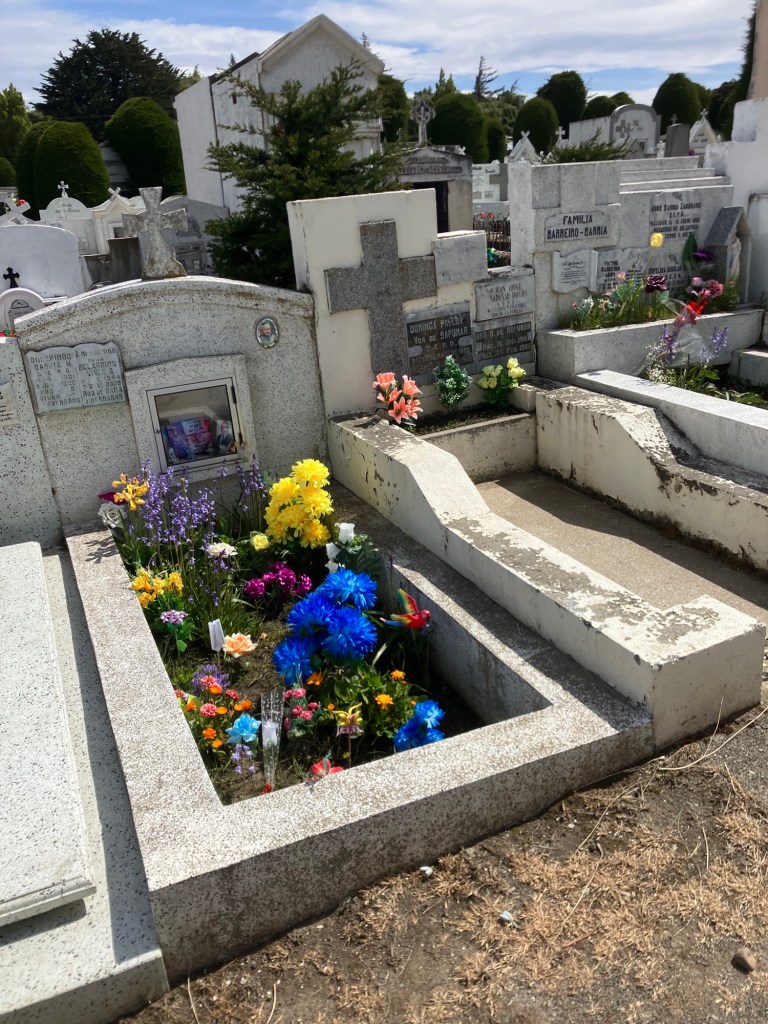
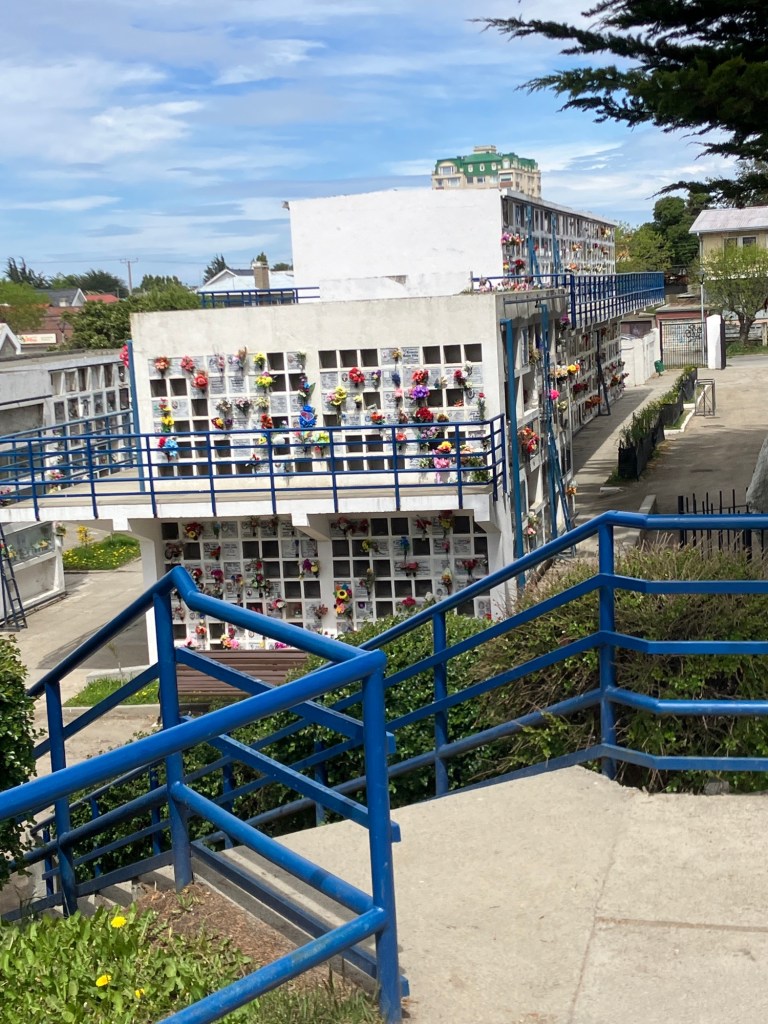
Bryan also made his own visit to the municipal cemetery. This is where Sara Braun, probably the most influential (and wealthy) person in the city was buried. He went by her mansion and found her grave. The cemetery had quite a few mausoleums, all well maintained, along with a number of buildings with individual crypts.


In this desolate part of the world we have not seen many other ships, especially cruise ships. This evening we met a sister ship in route to Antarctica.

 Kauffman Commentary
Leave a comment