We spent all of Monday traveling from Valparaiso to the Sacred Valley in Peru. We had a 90 minute bus ride to Santiago airport, a little more than a 3 hour flight to Lima, Peru. Then we caught a plane for a 90 minute flight to Cusco followed by a 90 minute bus ride to Urubamba, arriving about 11:00 pm, about 1:00 body time because this area is about 2 hours behind Chile and Argentina.
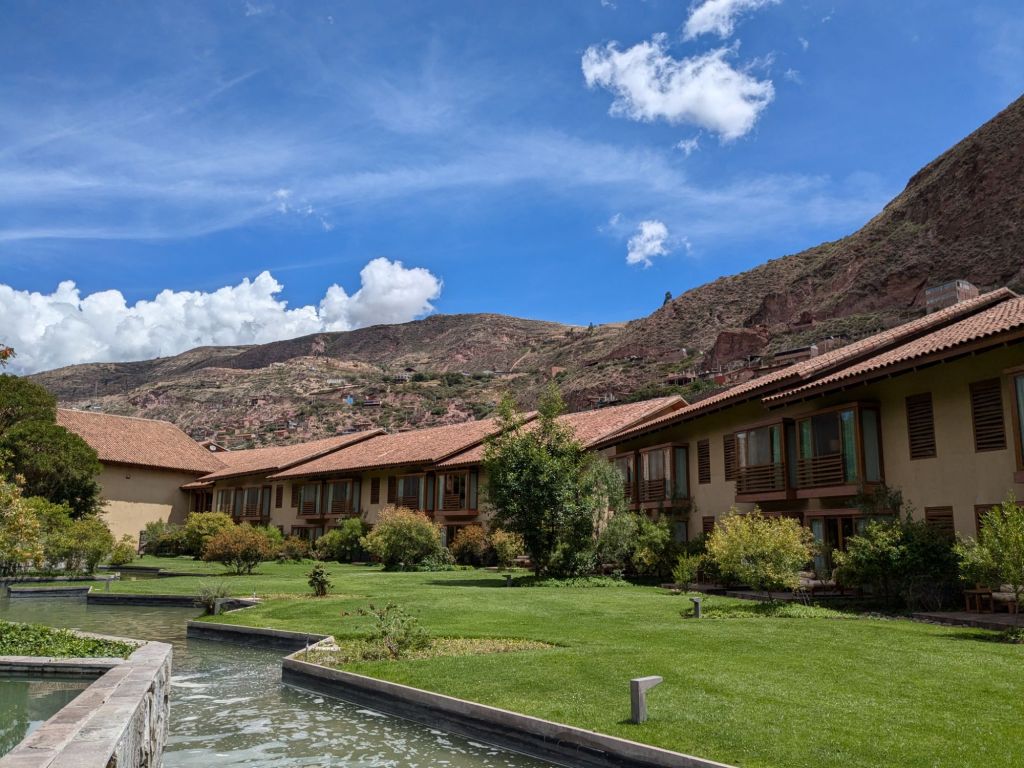
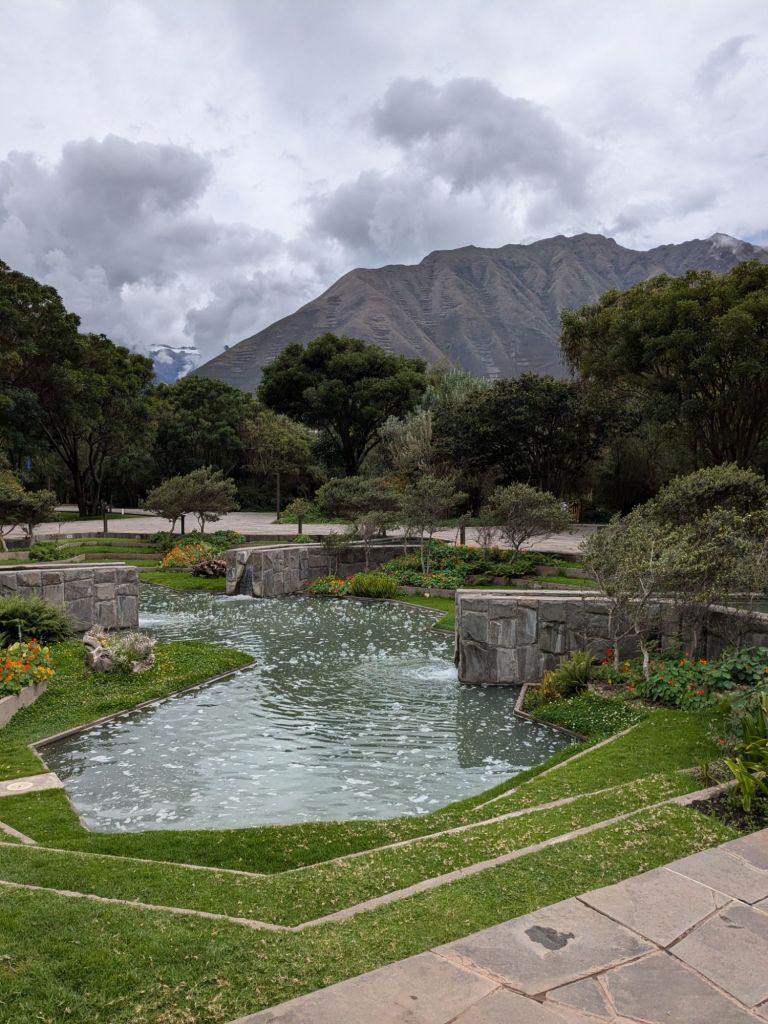
We have a great hotel here, with a great view, very large room and even a 6 month old alpaca, known as a cria, in the lobby.

Tara wasn’t feeling too well this morning so she stayed in the hotel while I went on the excursion to Ccorccor, a Peruvian village high in the Andes.
The drive took us out of the valley, at 9000 feet elevation, to over 12,500 feet. Every turn brought new, ever changing sights.

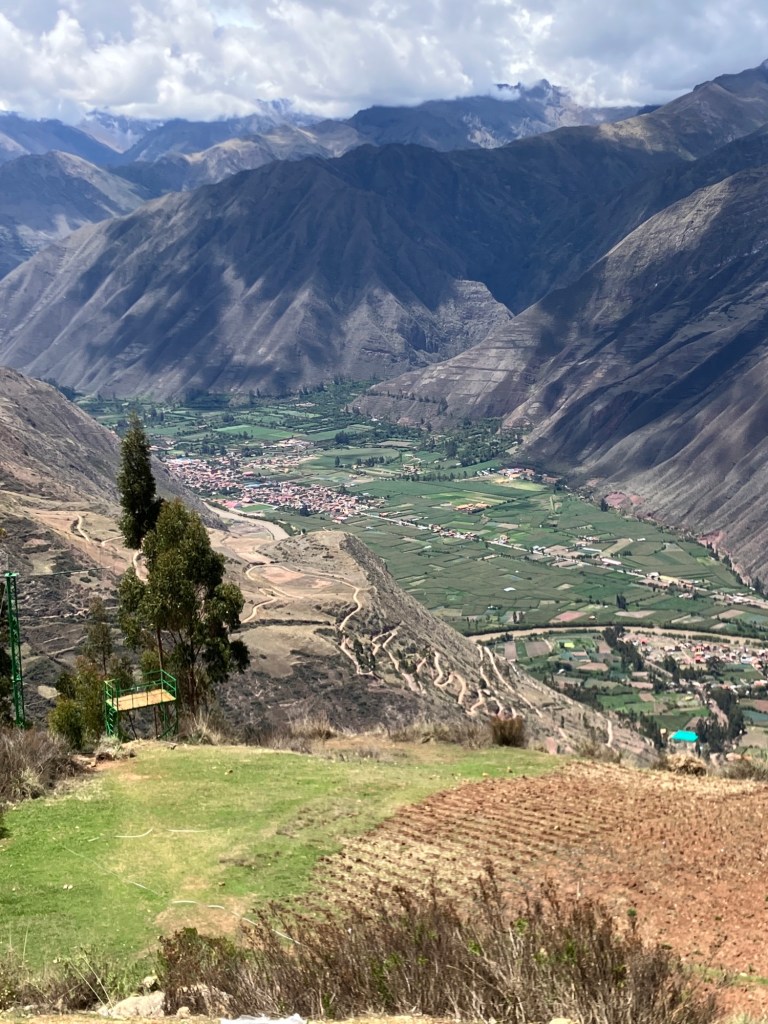
This area is nearly all farming, with very small family farms. They grow a lot of corn, along with a fair amount of quinoa.
Most farms have alpacas, pigs and sheep. The houses are very small, adobe buildings without heat or indoor plumbing, just outhouses (painted green).
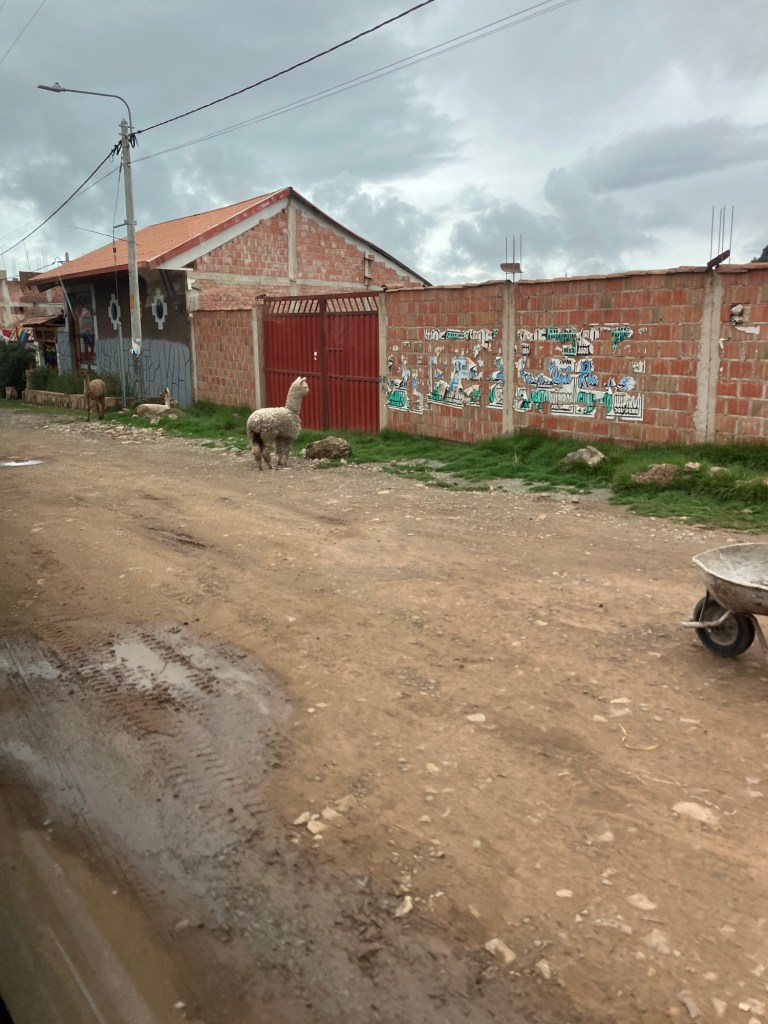

Some of the farms are considered community owned, with a group of 12 members owning the land. These owners usually meet on Sunday’s to discuss any issues related to the farm. A farmer can sell his interest in the farm if needed, but you don’t see any large, corporate type farms at all. Because this is their spring, we saw many of the plots being planted by hand with only 2 or 3 workers.
Ccorccor, is a small community of 27 families. We were greeted by about 25 villagers, dressed in their traditional clothing. The patterns vary from village to village and therefore you can tell what village they are from.
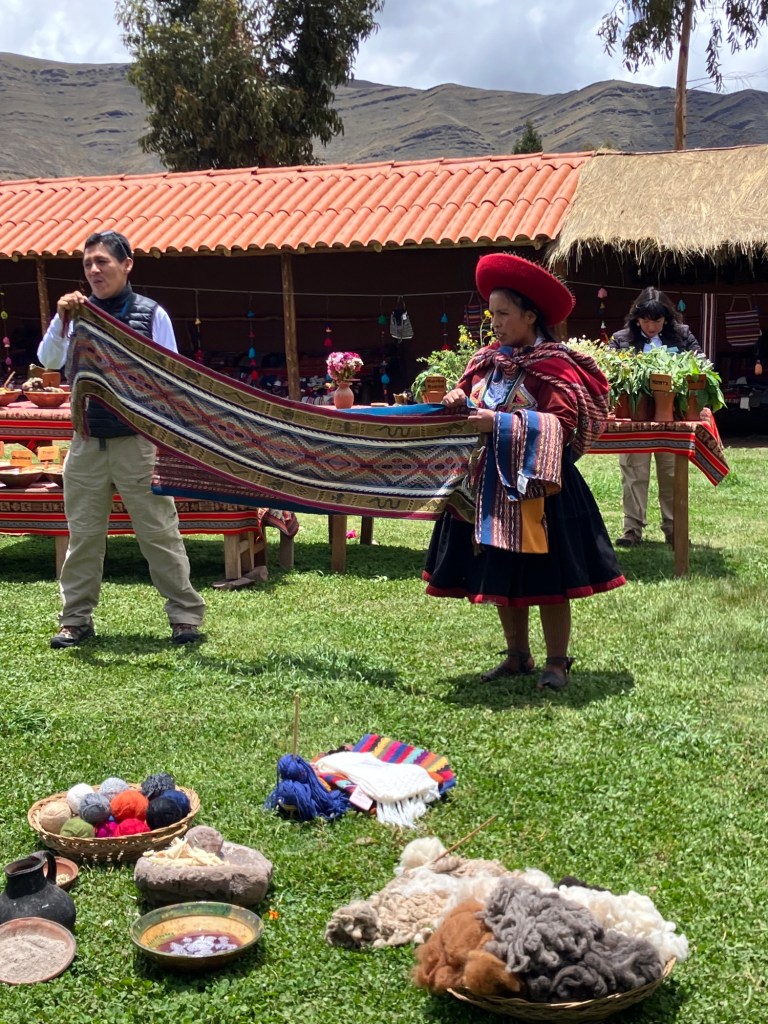
The villagers explained and showed us their dress, their herbs, foods and vegetables, and their process of processing, cleaning, dyeing and wearing their cloth.
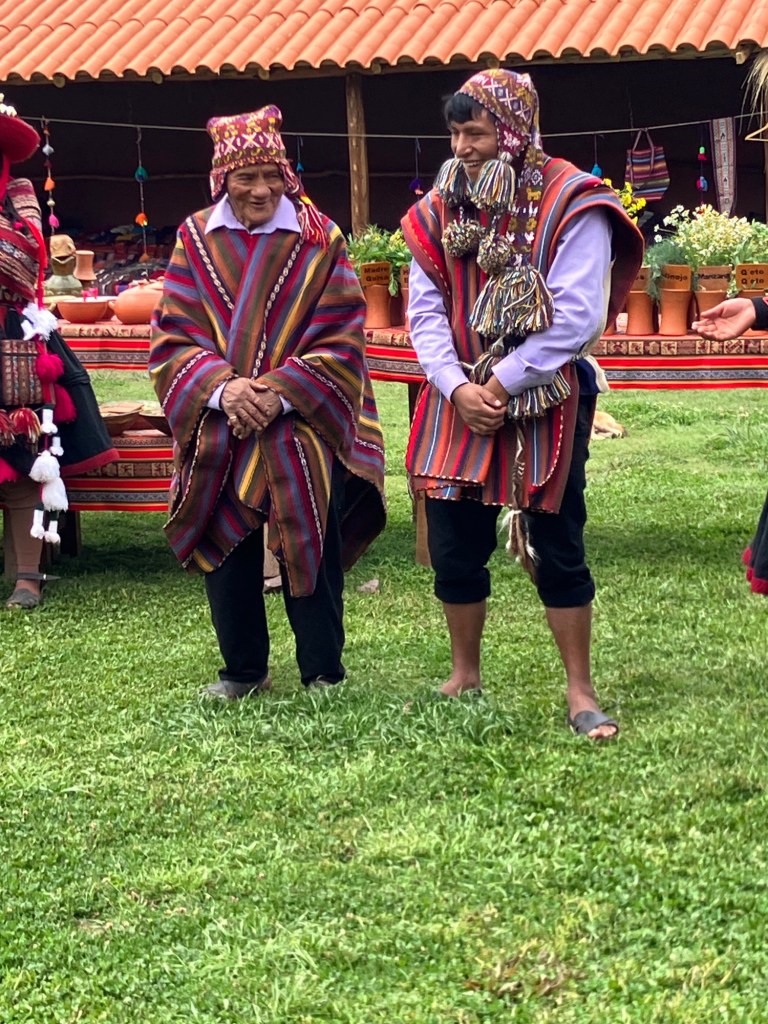

The dress varies depending on the marital status of the person. Single women decorate their hats with whore flowers and safety pins, while married women use colorful flowers, but not white and no safety pins. Single women have elaborate patterns on their shawls, pompous and small purses. Married women forego their shawls are less elaborate and used to carry stuff so they don’t need a purse.
Similar for the men; single men have ponchos without sleeves and rolled up pants to show off their muscles. Married men have sleeves and leave their pants long. The hats are also very different as the single men have pompous and long tails, while married men don’t. Single men also have a woven belt which can be used as a sling, like Daniel, or snapped like a whip to create a crack to scare off predators when guarding the livestock.
In the 1980’s and 1990’s, these people from the highlands were discriminated against in the cities because their skin is darker and they spoke a different language. Much of that has changed and many of these villagers spoke three languages or more.
We returned to town for a great lunch for just our group, with empanadas, roasted chicken, French fries, vegetables, and ice cream and grilled pineapple for dessert.
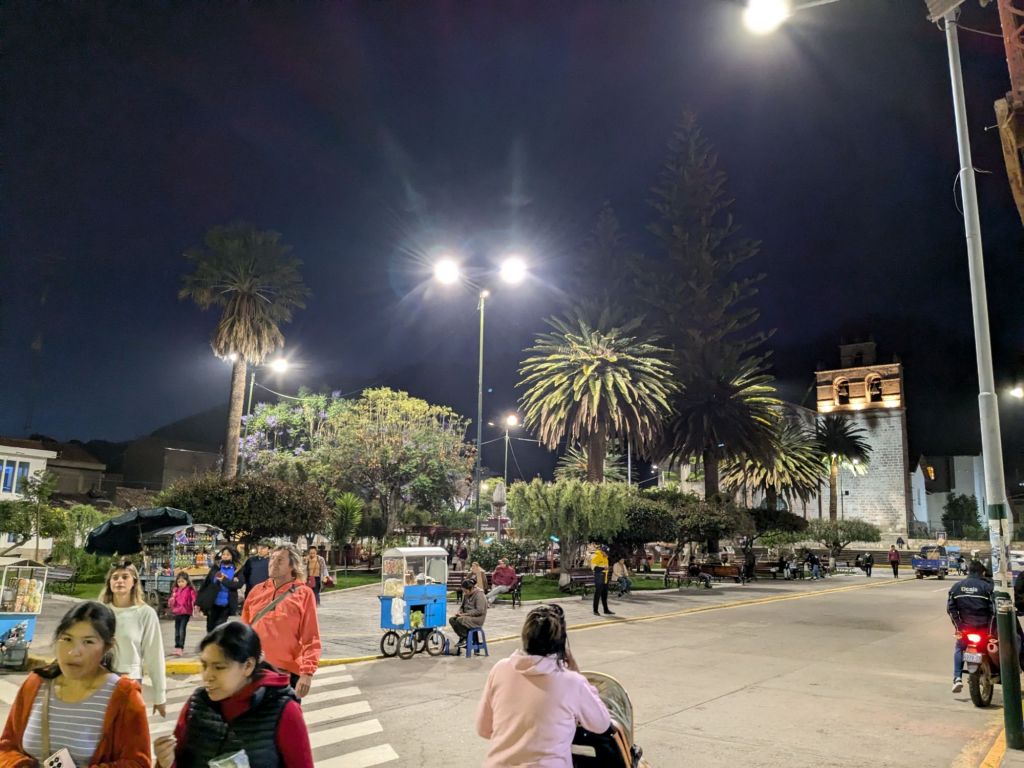
We went on a little walk to the square. It is a hopping town for a Tuesday evening. We really need to work on our Spanish. We had difficulty ordering pizza and drinks.


Now we begin the process of packing as tomorrow we go to Machu Picchu, ending the day in Cusco.
 Kauffman Commentary
Leave a comment