Jacinta, Francisco (siblings) and Lucia(a cousin) lived near the village of Fátima and spent their days tending sheep. On May 13, 1917 they saw a woman whom they identified as the Virgin Mary in a field. She appeared to them on the 13th day of the month, asking them to return on the 13th of each month for several months. They were going to keep this a secret between themselves, but the youngest, 7 yr old, told her parents. The secret was out and they were questioned by towns people and even the police. They never recanted their story.
The most famous event occurred on October 13, 1917. Thousands of people had gathered because the children had predicted that something extraordinary would happen.
According to witnesses, the sun appeared to move, spin or dance in the sky. Some reported seeing brilliant colors and the sun seemingly plunging toward the earth.
The children said Mary also revealed three secrets.
The first two concerned a vision of hell, the end of World War I and the possibility of another great war if humanity did not change.
The third secret was kept confidential for many decades. It was eventually published by the Vatican in 2000 and interpreted in connection with persecution of Christians and the attempted assassination of Pope John Paul II in 1981.
The two siblings died in 1919 and 1920 of the Spanish flu. Francisco and Jacinta were canonized as saints in 2017, exactly 100 years after the first reported apparition. Lucia lived much longer. She became a Carmelite nun and died in 2005, at age 97.
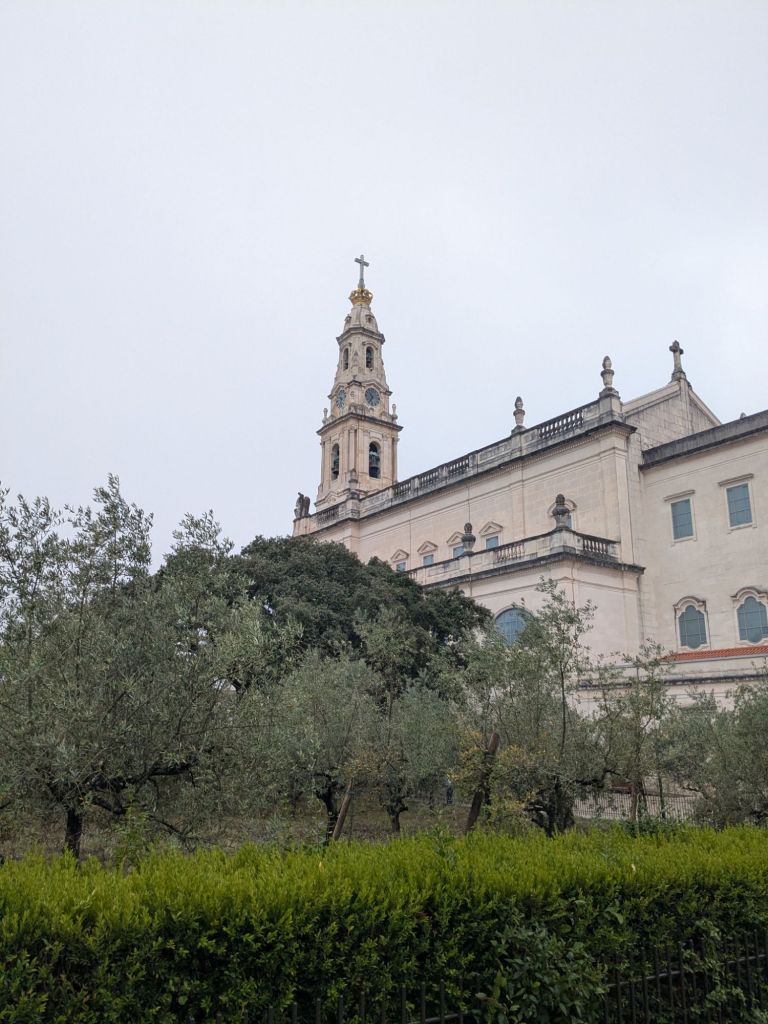
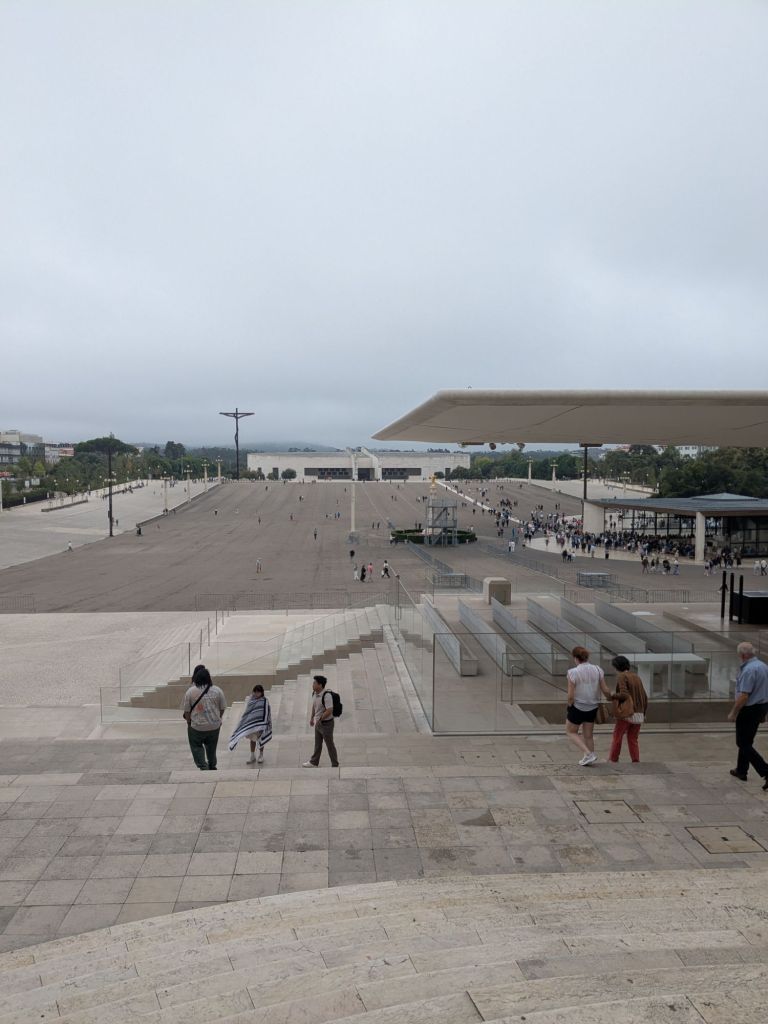
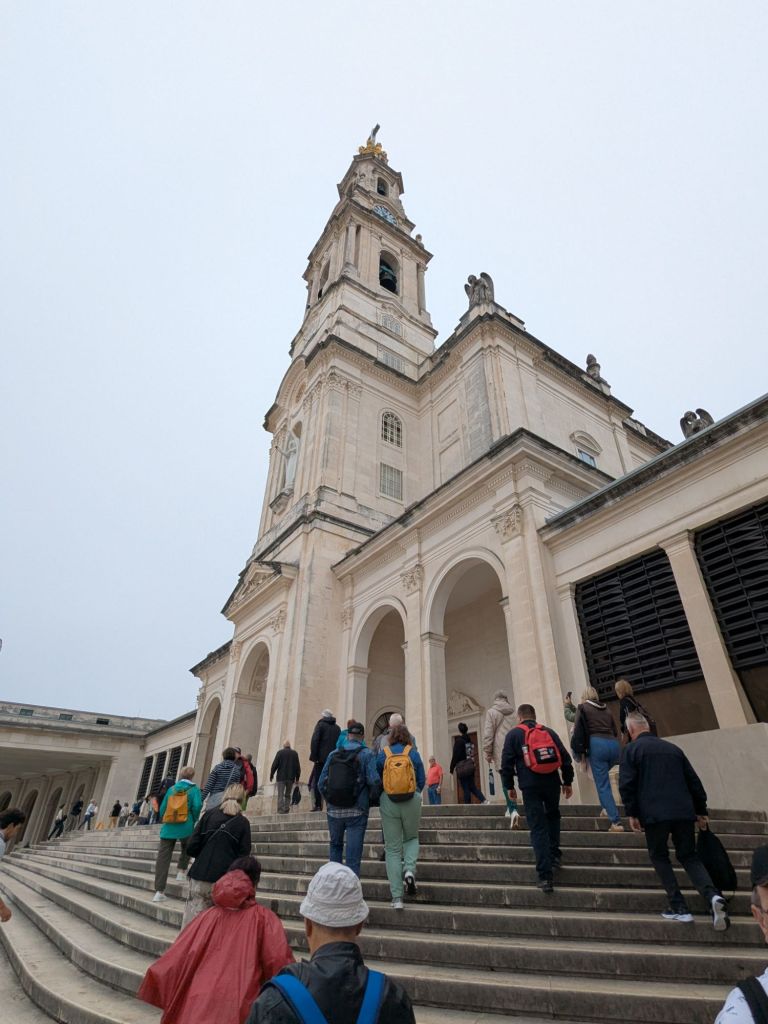
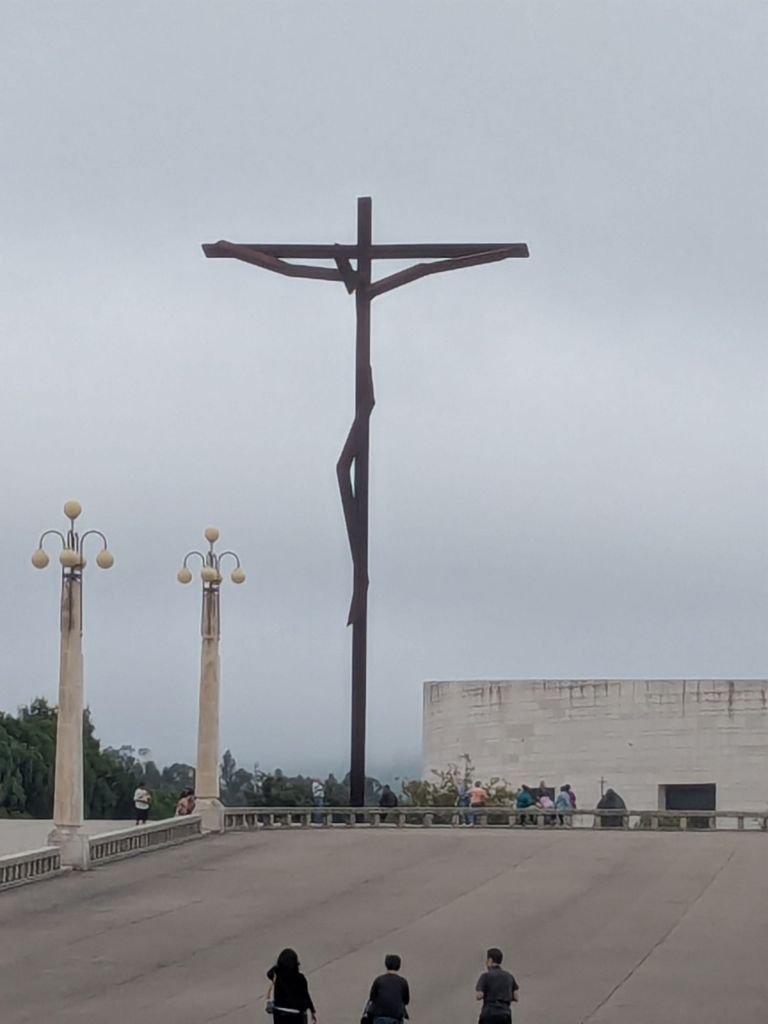
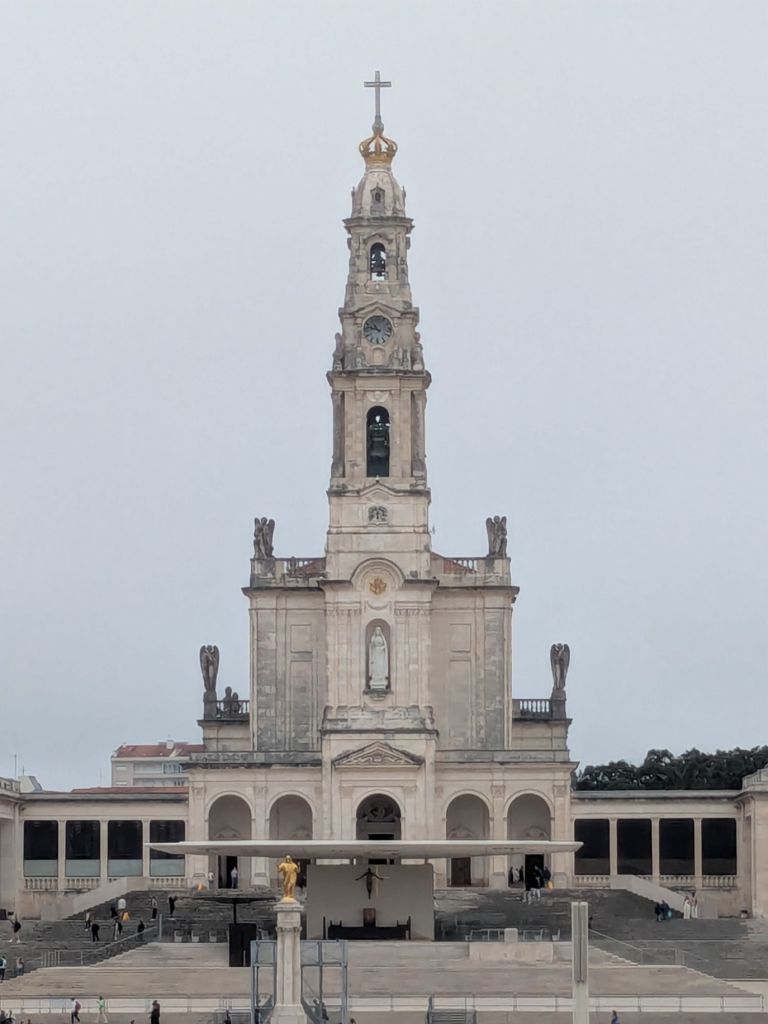
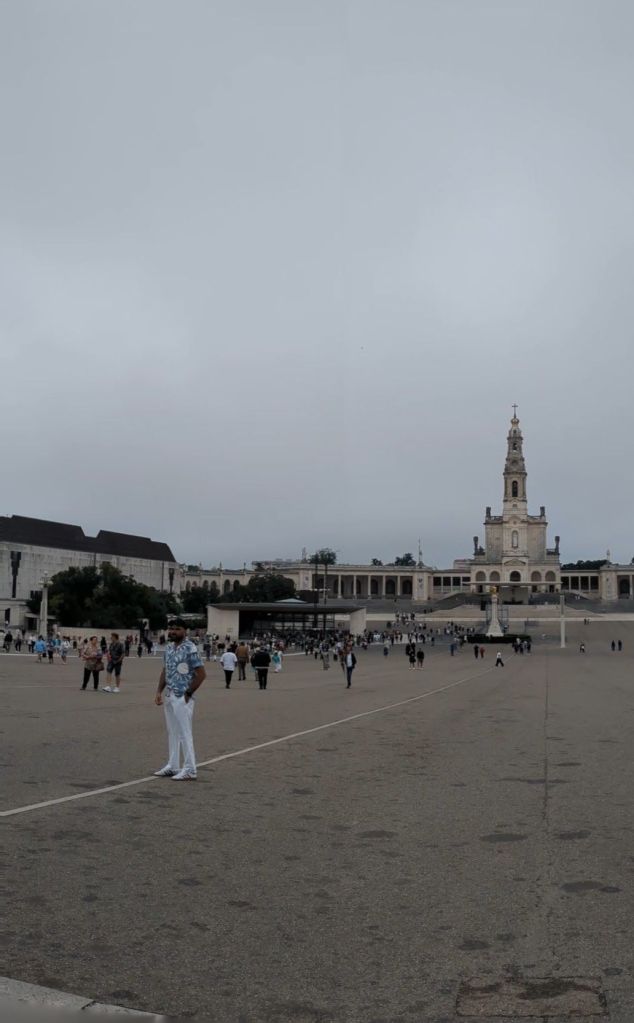
The enormous sanctuary today is centered on the Basilica of Our Lady of the Rosary, with its huge plaza where pilgrims gather.
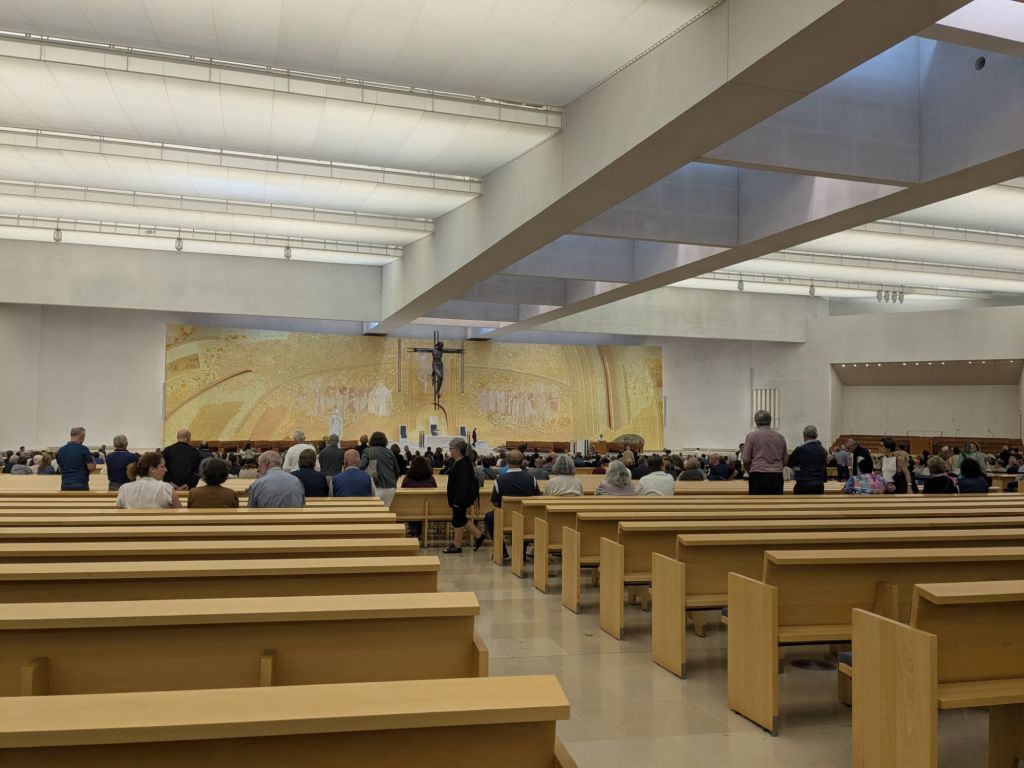
At the opposite end is the Basilica of the Most Holy Trinity, a much more modern church. Around 9,000 worshipers can fit into this sanctuary.
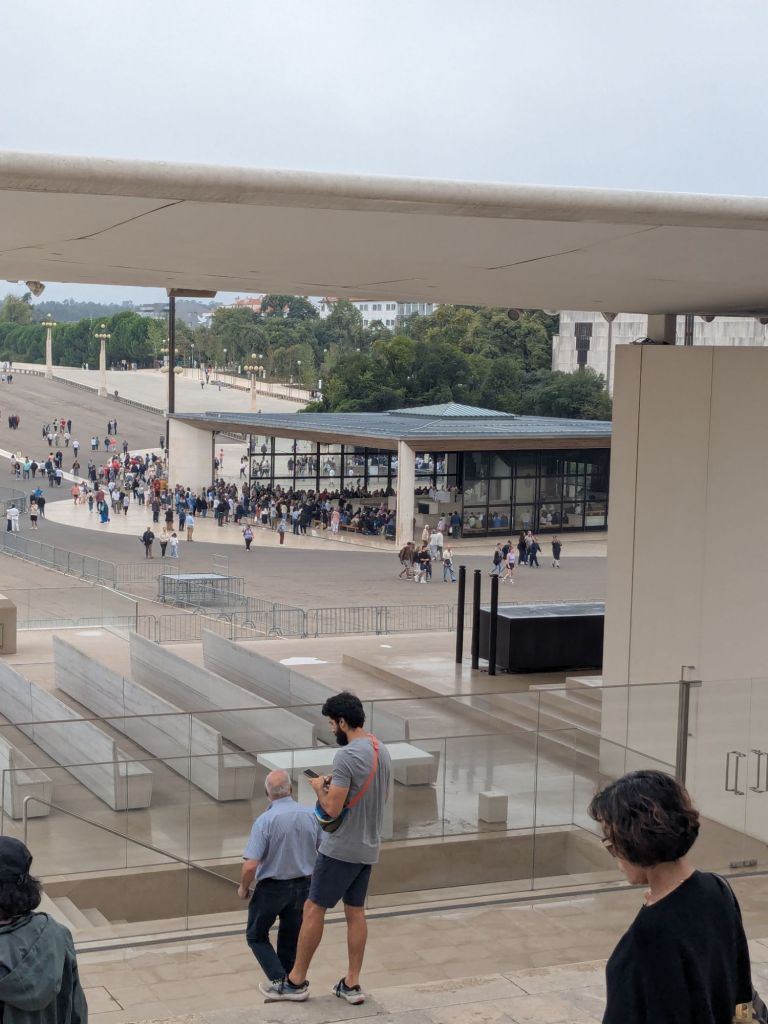
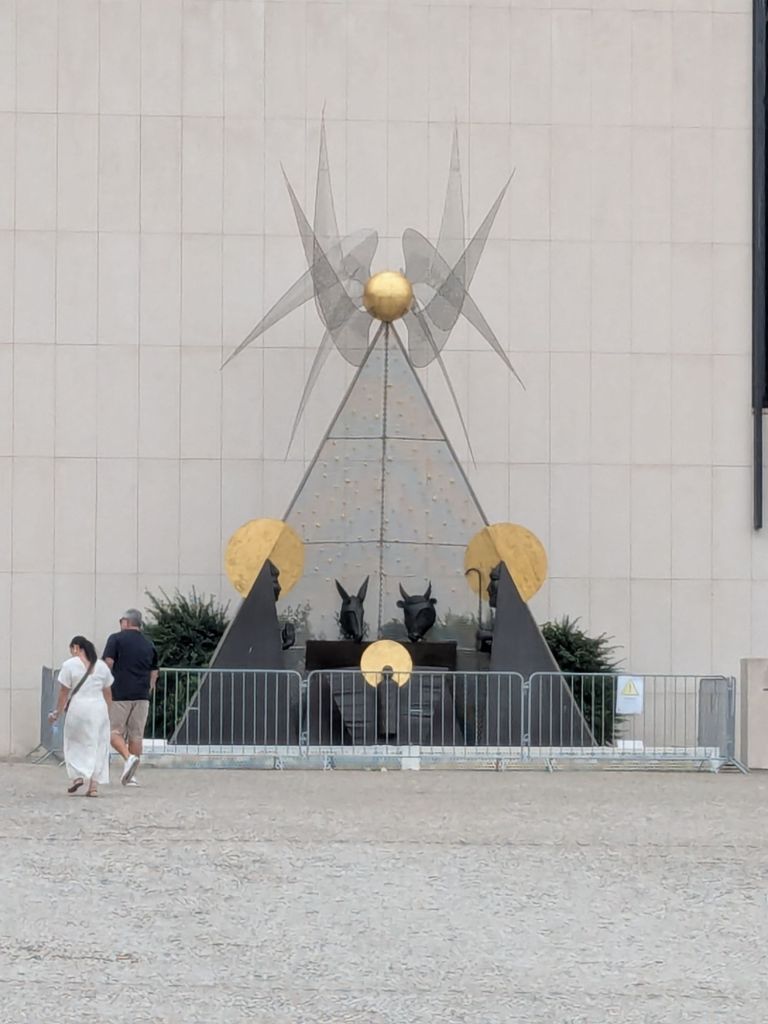
A smaller covered outdoor chapel is located on the enormous grounds.
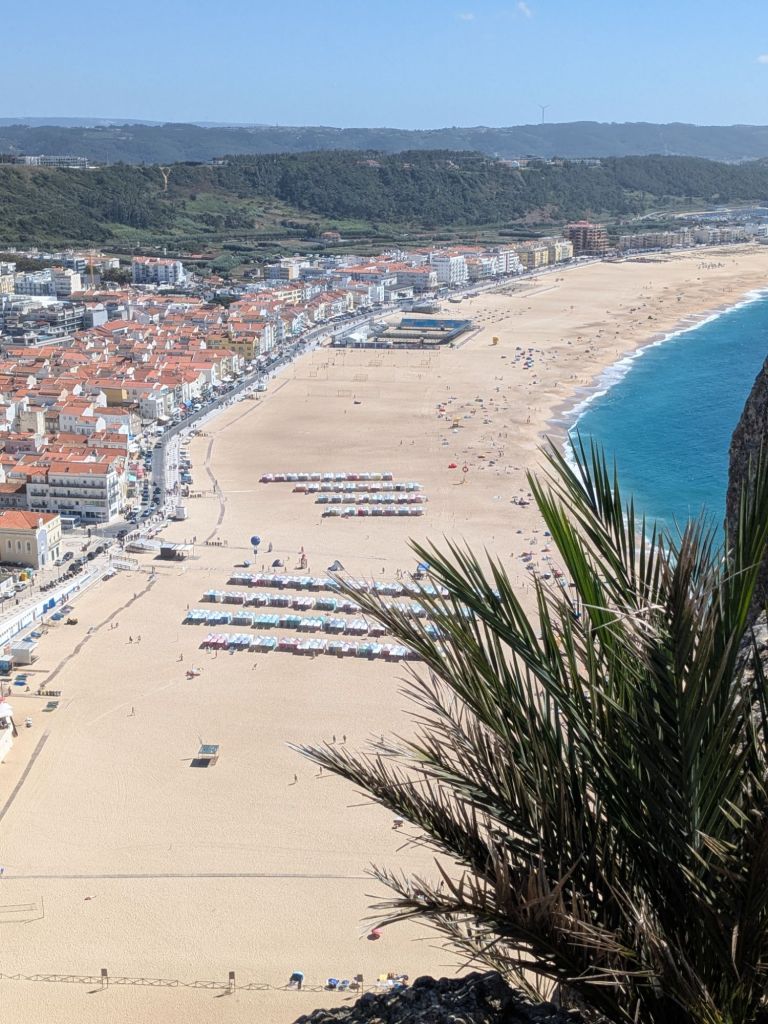
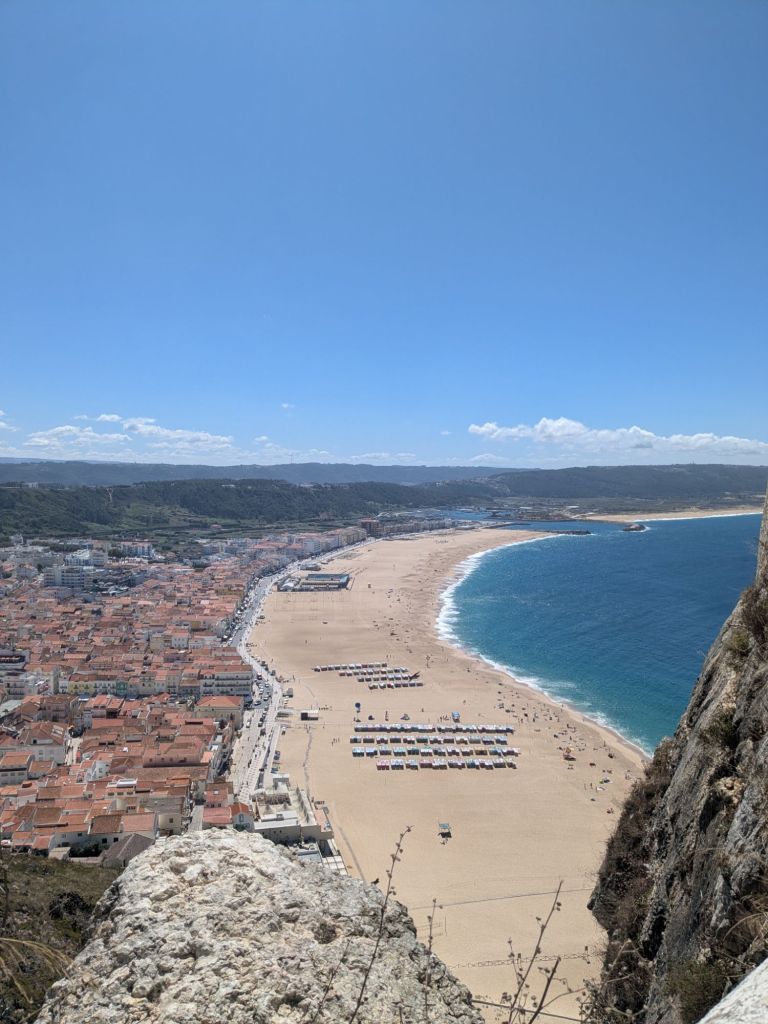
The story of Nazaré starts in 1182, when Nazaré’s cliffs were covered in thick fog.
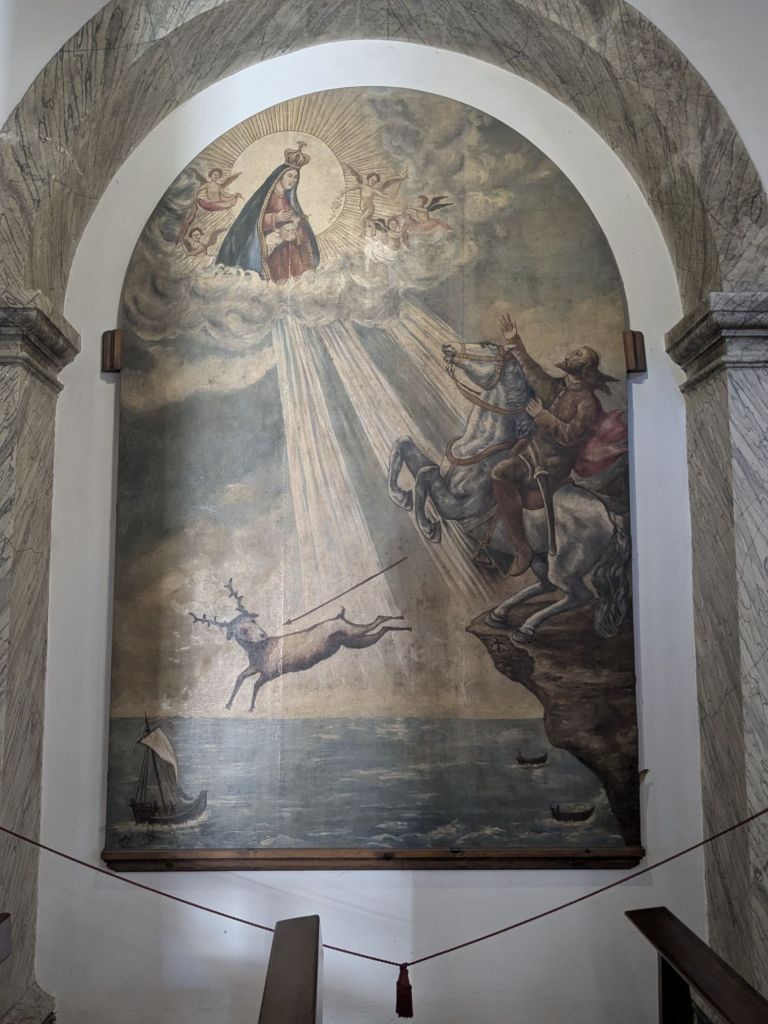
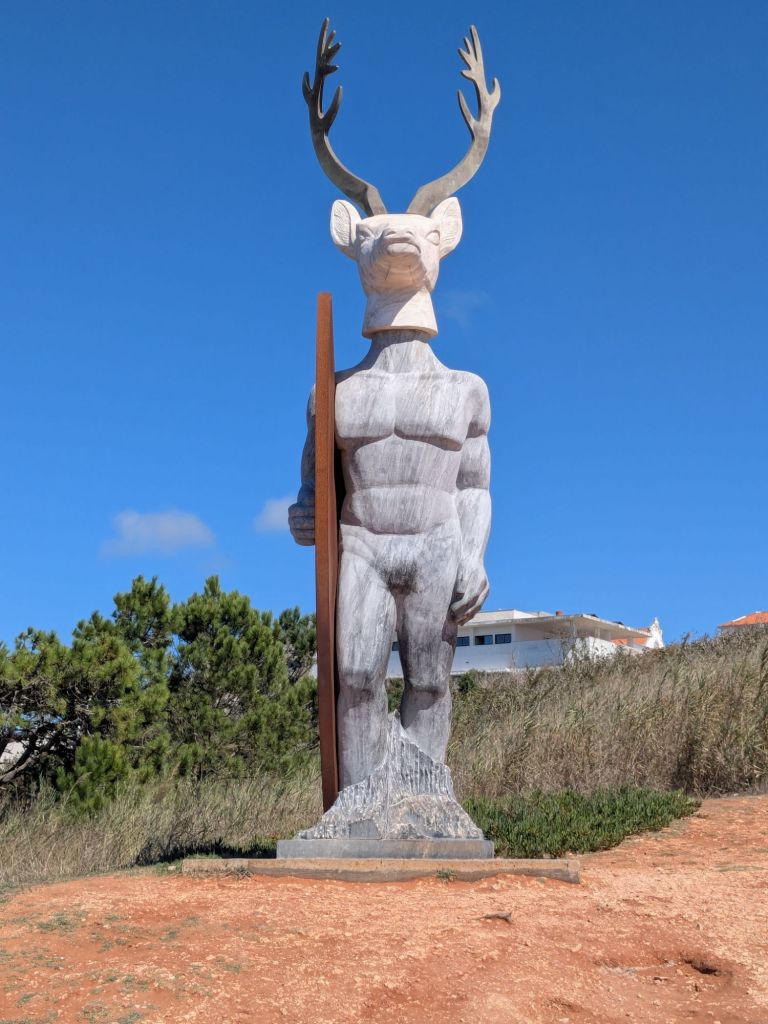
A nobleman named Dom Fuas Roupinho, who was the governor of the nearby castle, was out hunting on horseback. He spotted a magnificent deer and began chasing it through the mist.
The deer raced toward the edge of the cliffs.
But in the fog, he couldn’t see that they were approaching an enormous precipice above the Atlantic. Suddenly, the deer disappeared over the edge.
Dom Fuas realized that his horse was carrying him straight toward the same cliff.
At the last possible moment, he recognized the danger and cried out to Our Lady of Nazaré, asking the Virgin Mary to save him.
According to the legend, something miraculous happened. The horse suddenly stopped at the very edge of the cliff and he was saved.
In thanksgiving, Dom Fuas ordered a small chapel to be built over the cave where an ancient statue of the Virgin Mary was believed to have been kept.
Just offshore is Nazaré Canyon, an underwater canyon that extends roughly 230 kilometers into the Atlantic and reaches depths of around 5 kilometers.
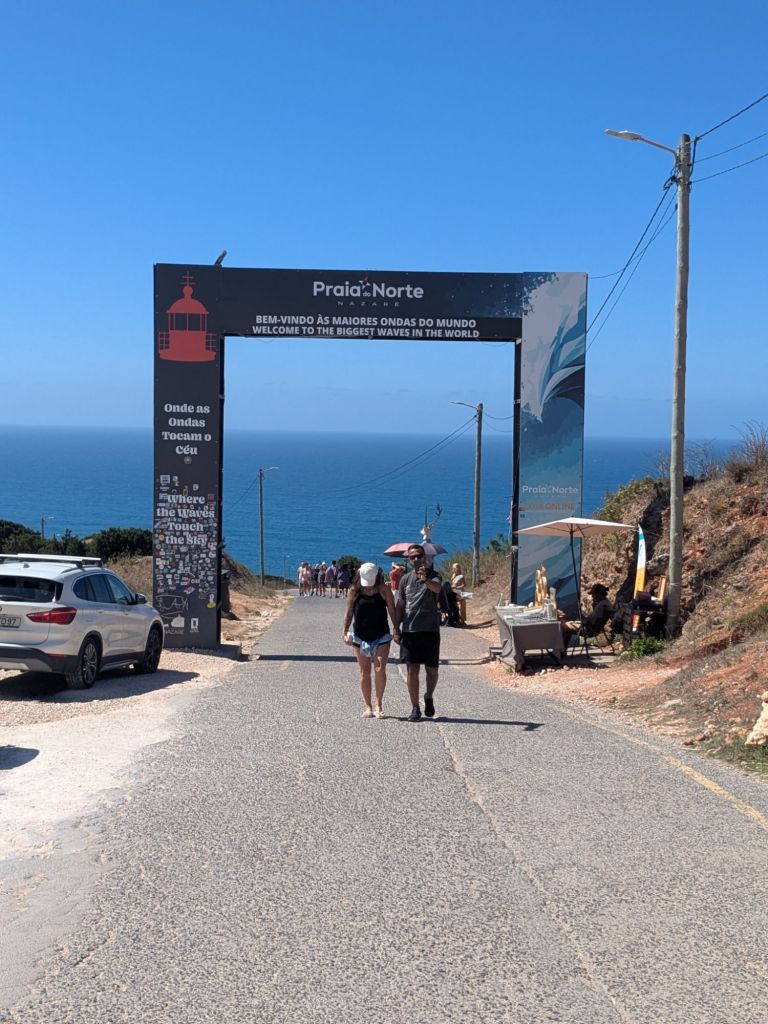
As Atlantic swells travel toward Portugal, the canyon channels and focuses the wave energy toward the coast. When the deep water suddenly becomes shallow near Nazaré, the waves can grow to extraordinary heights, especially in the winter.
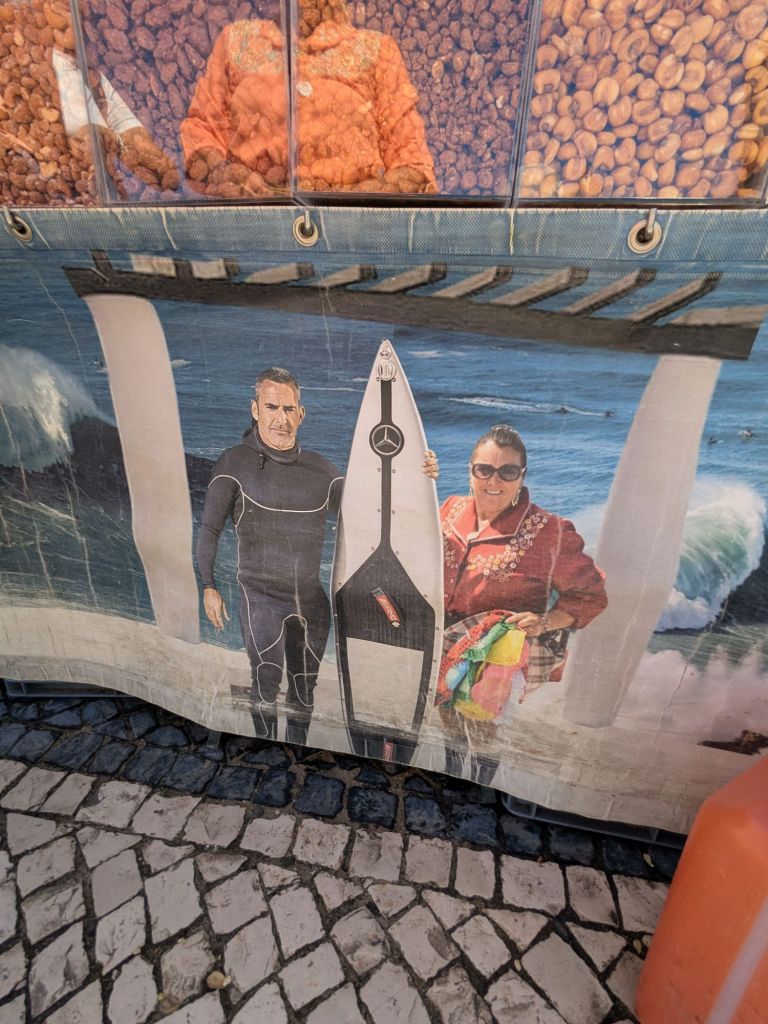
A surfer from the U.S. came to Nazaré in 2011 to see the huge waves. He talked to locals, who were afraid of the waves, about letting him surf them. After much talk and convincing, they decided to let him try. On November 1, 2011, McNamara surfed a wave that was officially measured at 78 feet (23.8 meters), establishing a Guinness World Record at the time.
In 2020, German surfer Sebastian Steudtner surfed a wave measured at 86 feet (26.2 meters), which broke the record set by the U.S. surfer.
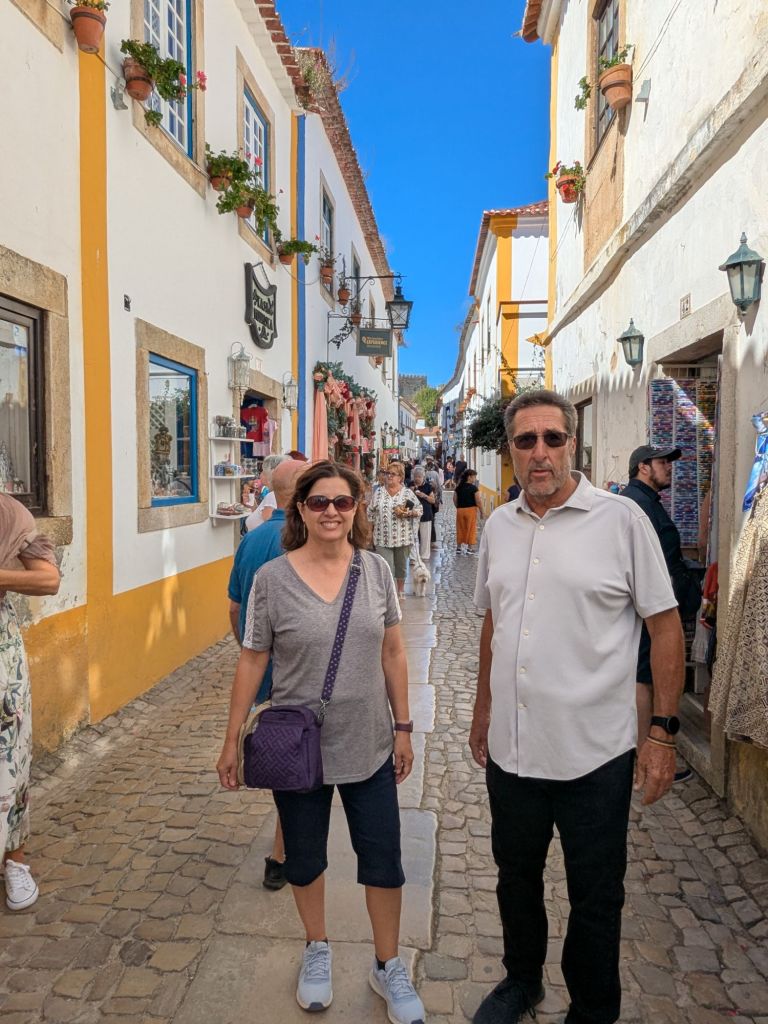
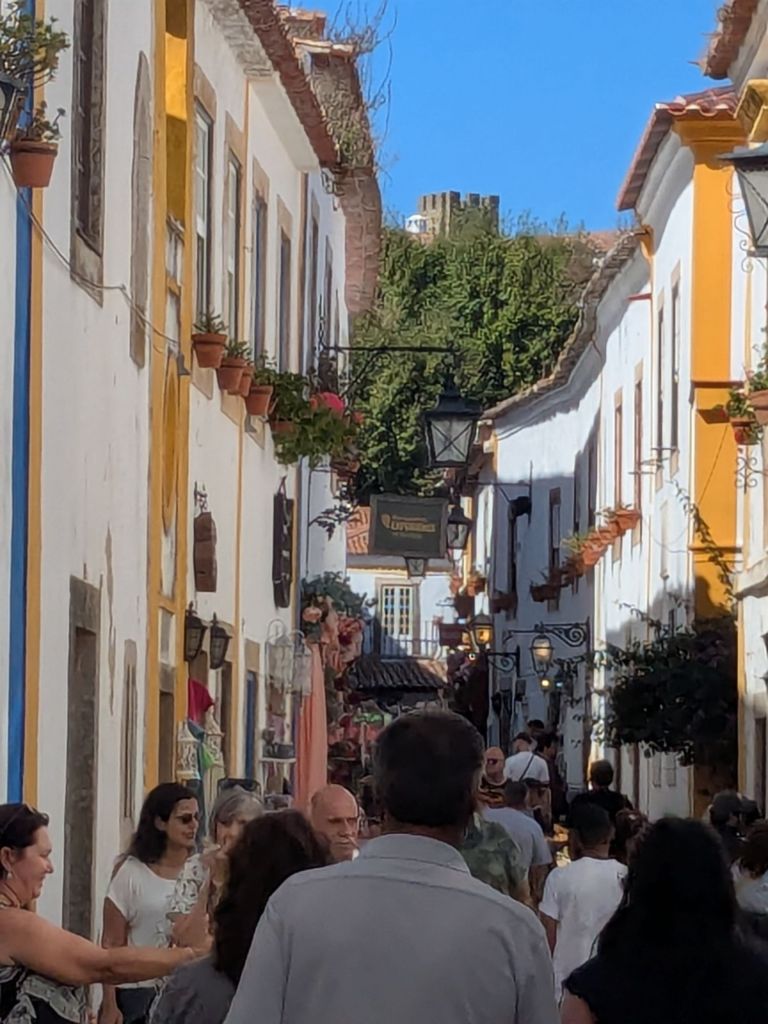
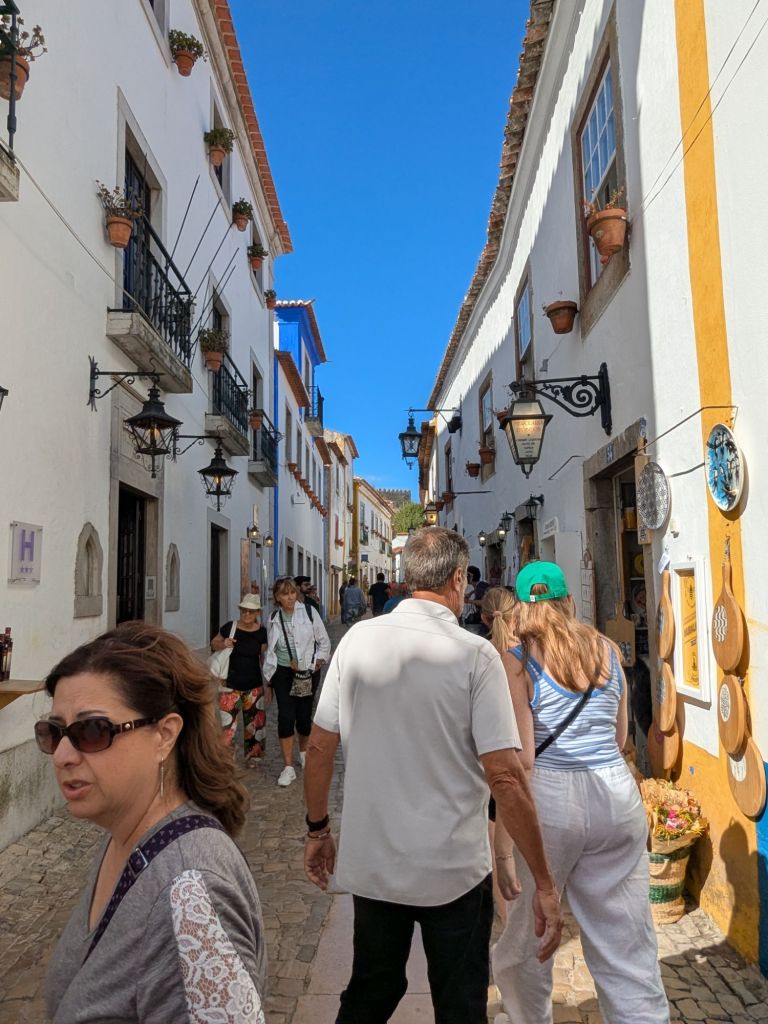
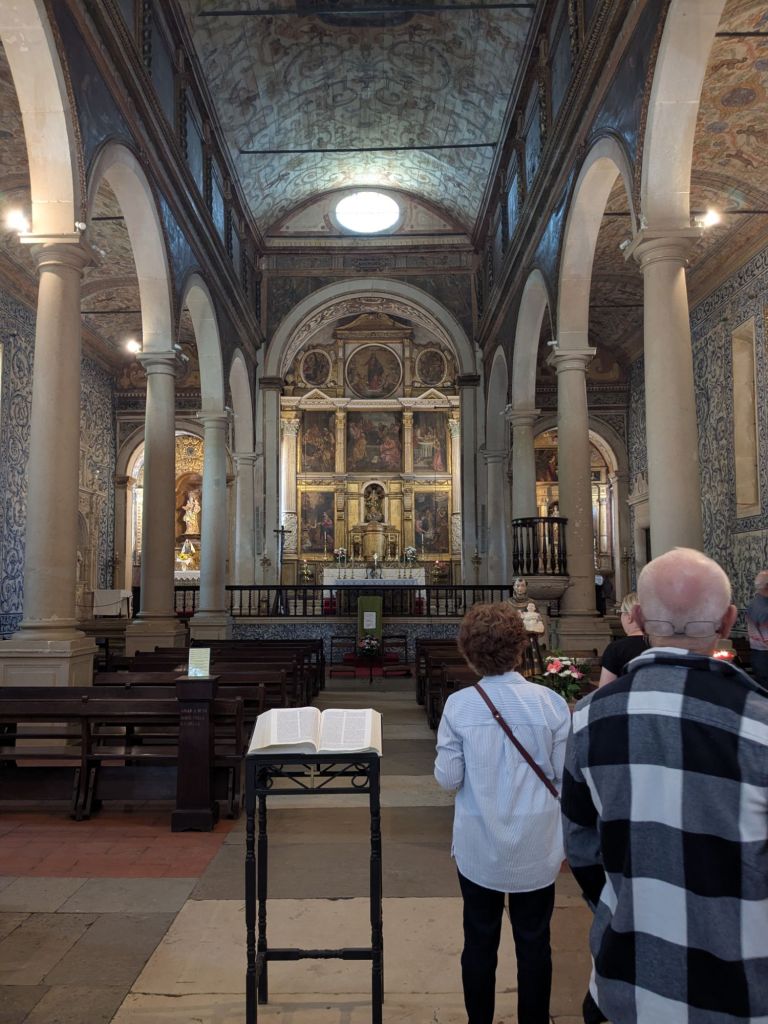
Óbidos is an ancient walled town whose history goes back well before Portugal became a nation. The Romans occupied the area, and later the Moors developed the settlement and fortified the hilltop.
In 1148, during Portugal’s Christian reconquest, King Afonso I (Afonso Henriques) captured Óbidos from the Moors. He gave the town to his wife the queen.


Leave a Reply